



People have begun to ring the death knell for blogging, citing growth in video and podcasts.
For B2B marketing, we’ve used blogs to showcase our expertise, educate our audience, and promote our work. “Content is King” has been the motto for decades, and blogging was leading the charge.
But now, with the dawn of AI search results, is blogging dead for business?
Neil Patel of NP Digital doesn’t think so.
NP Digital analyzed 20 companies over 12 months: 10 that kept blogging and 10 that stopped.
In a recent newsletter, he shared the results of their research:
1. Companies that kept blogging saw +85.8% more LLM traffic and +9.1% revenue growth.
2. Companies that stopped blogging lost 39.7% of their SEO traffic and saw a 10.4% revenue decline.
Why? Because Google and AI platforms (like ChatGPT) rely on fresh, structured, and authoritative content to decide what to show and cite.
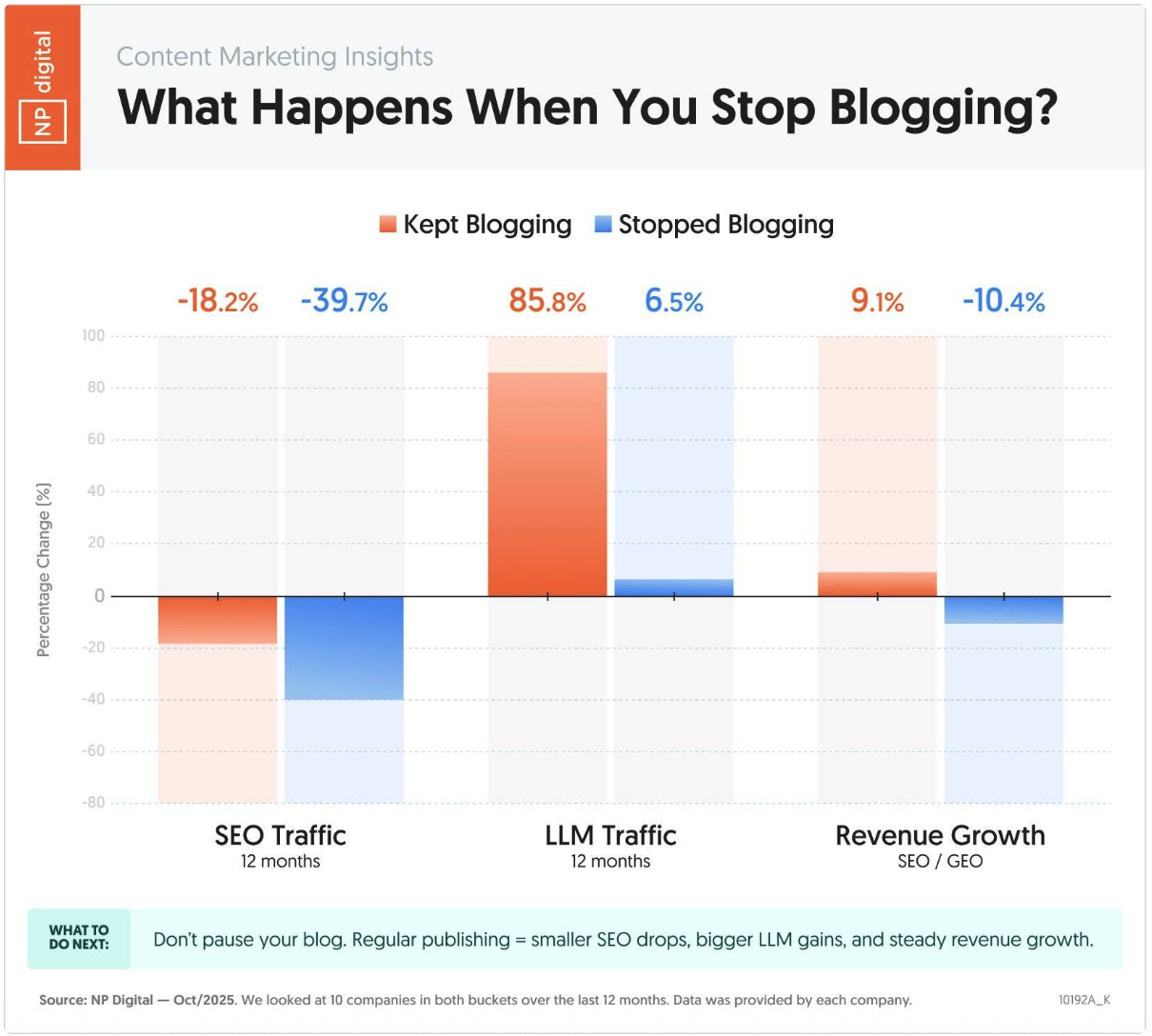
We see the same results with our clients, too!
For years, Identity Creative has been writing blogs for KIRKS, and the niche-specific content continues to help them rank, and they’re consistently turning up in AI search results.
These search results leverage their digital marketing budget and drive sales from places paid search can’t reach.
How can you leverage your blog content with the dawn of AI search?
Here are some quick tips you can use to optimize your evergreen content for AI search results:
Break longer content into clear sections using H2/H3 headings, bullet points, and numbered lists. Start each section by directly answering the related query in the first few sentences, making your content easy for AI systems to parse and summarize.
Even timeless content benefits from periodic updates. Refine posts with the latest statistics, examples, tools, and industry insights to signal ongoing relevance—AI systems prefer sources with current, accurate data.
People now use natural, conversational searches, and AI reflects this. Add FAQs, use question-format subheadings, and build in long-tail keywords based on the kinds of questions your audience asks.
Write clear, concise sentences, and use varied terminology related to your core topic (e.g., “evergreen content,” “content with lasting value,” “long-term assets”). Avoid jargon overload so AI models understand your content’s meaning quickly.
Continue following strong technical SEO fundamentals—clear metadata, schema markup (especially FAQ and How-To), fast page load times, mobile optimization, and internal linking. These factors help both search engines and AI tools surface and cite your content more reliably.
Time-out Marketing has a good post here about identifying and leveraging your evergreen content for AI search.
Applying these steps makes your evergreen content easier for AI-powered search engines to recommend and reference, ensuring your posts stay visible as search technology evolves.